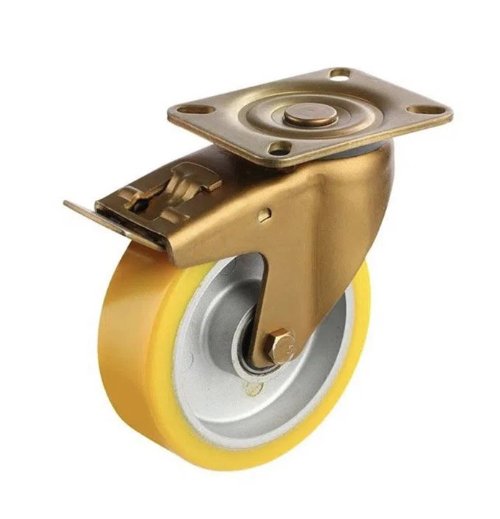

Heavy duty PU caster refers to a type of caster that is designed to withstand heavy loads and provide durability in demanding environments. PU stands for polyurethane, which is a type of material used in the wheels of the caster.The heavy-duty nature of these casters makes them suitable for applications that involve moving and transporting heavy objects, such as industrial equipment, machinery, and furniture.
Advantages of Heavy Duty PU Caster
High Load Capacity
Heavy duty PU casters are designed to handle heavy loads and can often support weights of up to several hundred kilograms.
Durability
PU (polyurethane) is a highly durable and resilient material that can withstand heavy use and resist wear and tear. This makes heavy duty PU casters ideal for use in demanding environments and applications.
Floor Protection
PU casters are known for their excellent floor protection properties. They have a low rolling resistance, which helps to prevent damage to floors and reduce noise levels.
Non-Marking
PU casters are non-marking, which means they do not leave marks or scuffing on floors, making them suitable for use on delicate surfaces such as hardwood, tile, or linoleum.
Versatility
Heavy duty PU casters are available in a wide range of sizes, configurations, and load capacities, making them suitable for a variety of applications, including industrial carts, trolleys, equipment racks, and material handling equipment.
Easy Maintenance
PU casters are easy to clean and maintain. They are resistant to water and most cleaning agents, allowing for easy cleaning and preventing the buildup of dirt and debris.
What Is The Material Composition Of Heavy Duty Pu Caster
Heavy-duty PU casters typically consist of a metal frame and polyurethane wheels. The frame is usually made from materials such as carbon steel, stainless steel, or cast iron, chosen for their strength and ability to support heavy loads. These metals are often treated with corrosion-resistant coatings or finishes to protect against environmental damage.
The wheels are composed of a core and a tread. The core is generally made from a hard, durable material like cast iron, nylon, or a composite material, which provides structural integrity and supports the weight of the load. The tread, which comes into direct contact with the ground, is made from polyurethane. This material is a synthetic thermosetting plastic that offers a balance of hardness, flexibility, and abrasion resistance, making it suitable for industrial applications.
Polyurethane is preferred for its ability to withstand impacts, resist chemicals, and provide a long service life. The exact formulation of the polyurethane can vary, with different hardness levels and additives used to tailor the material's properties to specific needs, such as improved resistance to cutting, gouging, or temperature extremes.
Heavy-duty PU casters are designed to combine the strength and durability of metal frames with the performance benefits of polyurethane wheels, resulting in a product capable of handling demanding conditions and heavy loads while offering a smooth and efficient rolling experience.
Can Heavy Duty PU Casters Be Used On Inclined Surfaces
Heavy-duty PU (polyurethane) casters can be used on inclined surfaces, but there are certain considerations to ensure safe and effective operation. The ability of a caster to perform on an incline depends on several factors, including the wheel material, wheel design, caster configuration, and the steepness of the incline.
Wheel Material: PU wheels are generally resilient and can provide good traction on various surfaces. However, the coefficient of friction between the PU wheel and the incline's surface will determine how well the caster climbs the slope without slipping.
Wheel Design: Solid polyurethane wheels are less likely to deform under load compared to pneumatic tires, which means they can maintain better contact with the surface and provide more consistent traction. Segmented or ribbed tread patterns can also improve grip on inclined surfaces.
Caster Configuration: Swivel casters allow for easier maneuverability and can help negotiate inclines by adjusting to the angle. However, rigid casters might be preferred for very steep inclines where stability is crucial.
Load Capacity And Incline Angle: The steeper the incline, the greater the force pushing the load downhill. It is essential not to exceed the caster's recommended load capacity, as doing so can increase the risk of tipping or failure.
Brake Systems: Equipping casters with brakes can help to prevent unwanted movement on inclines. Total enclosure brakes are particularly effective as they are less susceptible to dirt and debris that could impair performance.
Surface Conditions: The condition of the incline's surface plays a significant role. A smooth, even surface will allow for better caster performance than one that is rough, uneven, or covered in loose material.
Speed of Movement: Moving loads up or down an incline too quickly can lead to loss of control. It is advisable to move loads slowly and carefully to maintain stability.
How Do Install Heavy Duty PU Casters
Installing heavy-duty PU casters involves several steps to ensure they are attached correctly and safely. Here is a detailed guide to help with the installation process:
Choose The Right Casters
Before installing, confirm that the casters you have selected are compatible with the equipment you intend to use them on. Check the bolt patterns, hole sizes, and overall capacity of the casters to match the requirements of your cart or dolly.
Prepare The Mounting Surface
Clean the area where the casters will be mounted. Remove any debris, rust, or old paint that might prevent the casters from sitting flush against the surface. If necessary, sand or grind down any irregularities to create a smooth mounting surface.
Align The Holes
Lay the caster in place and align the holes in the mounting plate with the pre-drilled holes in your equipment. Ensure that the caster is oriented correctly, with the swivel and brake mechanisms easily accessible.
Install Bolts And Nuts
Insert bolts through the holes from the underside of the equipment. Use a wrench or socket to secure the nuts on the other side. Do not fully tighten the nuts yet; leave them loose enough to allow for minor adjustments.
Check Alignment
While the bolts are still loose, check the alignment of all four casters. They should be parallel to each other and perpendicular to the direction of travel. Make sure the wheels are free to spin without binding or excessive play.
Tighten Bolts
Once the alignment is confirmed, gradually tighten all the bolts and nuts. It's advisable to alternate between opposite corners to ensure even pressure and to prevent warping of the mounting plate.
Final Inspection
Tighten the fasteners one last time to ensure they are snug and secure. Check that the casters swivel smoothly and that the brakes engage and release as expected. Verify that there is no wobble or excessive play in the wheels.
Test The Equipment
Load the equipment with a representative amount of weight (if possible) and move it around to test the casters under normal operating conditions. Listen for any unusual sounds or feel for vibrations that might indicate an issue with the installation.
Adjust As Needed
If any problems are detected, loosen the bolts and make the necessary adjustments. This could involve realigning the casters, replacing worn parts, or ensuring that the equipment is level.
How Is Heavy Duty PU Caster Manufactured
Heavy-duty PU (polyurethane) casters are typically manufactured through a multi-step process. Here is a general overview of the manufacturing process:
Mold Preparation
The molds for casting the PU caster are prepared. These molds are usually made of metal and consist of two halves that can be opened and closed. The molds are cleaned and coated with a release agent to prevent the PU from sticking to the mold.
Mixing The PU Material
The PU material is prepared by mixing polyol and isocyanate components in the appropriate ratios. This mixture can also include additives such as colorants, fillers, and reinforcing agents, depending on the desired properties of the caster.
Casting
The prepared PU material is poured into the mold cavities. The mold is closed, and the PU is allowed to cure and solidify. The curing process can be accelerated by applying heat or using a chemical catalyst.
Demolding
Once the PU has fully cured, the mold is opened, and the solidified PU caster is removed. The casting is carefully demolded to avoid any damage to the final product.
Trimming And Finishing
The excess material or flash around the caster is trimmed off using cutting tools. The surface of the caster is then smoothed and finished, ensuring a clean and uniform appearance.
Quality Control
The manufactured casters undergo various quality control tests to ensure they meet the required specifications. This can include checking dimensions, hardness, load-bearing capacity, and other performance parameters.
Mounting and Packaging
The casters are then mounted onto a metal or plastic wheel bracket or frame, which provides the necessary attachment mechanism. Finally, the finished casters are packaged and prepared for shipment.