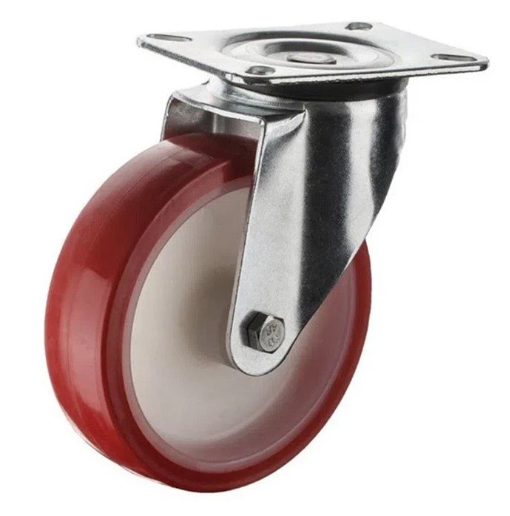

What Is Nylon Industrial Caster
A nylon industrial caster is a type of wheel that is designed for heavy-duty industrial applications. It is typically made from nylon to provide durability and strength. Nylon is known for its resistance to wear, chemicals, and impacts, making it ideal for use in industrial settings where there may be high loads, rough surfaces, or exposure to various chemicals.
Advantages of Nylon Industrial Caster
Durability
Nylon is a highly durable material that can withstand heavy loads and constant use. It is resistant to wear and tear, making it ideal for industrial environments where there may be rough or uneven surfaces.
Corrosion Resistance
Nylon is resistant to most chemicals, oils, and solvents, making it suitable for use in industries where these substances are present. It does not rust or corrode like metal casters, ensuring a longer lifespan.
Noise Reduction
Nylon casters are known for their quiet operation. They produce less noise compared to metal casters, making them ideal for applications that require a quiet working environment.
Non-Marking
Nylon casters are non-marking, meaning they do not leave scuff marks or damage floors. This is especially important in industries where protecting the flooring is essential, such as hospitals, hotels, or warehouses with polished floors.
Light Weight
Nylon is a lightweight material, which makes it easier to maneuver and transport heavy loads. This reduces the strain on workers and increases productivity.
Easy Maintenance
Nylon casters are relatively easy to clean and maintain. They do not require regular lubrication like metal casters, saving time and effort in maintenance.
How To Reduce The Noise Of Nylon Industrial Casters
Reducing the noise of nylon industrial casters can be achieved through a variety of engineering strategies and maintenance practices. Here are some effective methods:
Lubrication
Regularly apply high-quality wheel bearing grease or special caster lubricant to the rotating parts and raceways of your casters. Proper lubrication reduces friction between moving parts, which are a significant source of noise.
Wheel Material
Make sure the nylon wheels are in good condition and have no cracks or damage. Worn or deformed wheels increase friction and vibration, resulting in higher noise levels.
Grinding Wheel Hardness
Use a grinding wheel with a Shore A hardness rating appropriate for the surface it will be operated on. Softer wheels make less noise on hard surfaces, while stiffer wheels are quieter on rough terrain.
Wheel Size
Larger wheels have lower ground pressure, roll smoother, and reduce noise. They also have a greater ability to climb over obstacles, reducing the need for rapid movements to produce sound.
Rotating Mechanism
Check whether the rotating mechanism is running smoothly. Loose or dirty swivel joints can seize and create additional noise. Keep swivel joints clean and well lubricated.
Installation Integrity
Make sure the casters are securely mounted to the equipment. Loose installation can cause vibration and noise. Tighten all hardware and check mounting components for gaps.
Floor Condition
Maintain the floor surface on which casters run. Uneven or dirty floors can cause wheels to jam or bounce, causing noise. Smooth, clean floors allow for smoother caster operation.
Speed Control
Reduces the movement speed of equipment equipped with casters. Higher speeds may result in increased noise because the wheels spin faster and impact the floor more.
Caster Design
If possible, choose a caster design with noise reduction features. Some manufacturers offer caster models designed with noise-reducing materials or special geometries to minimize sound.
Nylon, particularly nylon 6 and nylon 6/6, is known for its excellent chemical resistance compared to many other polymers. Its resistance to various chemicals makes it suitable for use in environments where contact with corrosive substances is common. Here's a breakdown of the typical chemical resistance of nylon industrial casters:
Alkalis: Nylon has good resistance to alkaline substances, including mild solutions of sodium hydroxide (NaOH) and potassium hydroxide (KOH). It can withstand exposure to detergents and cleaning agents that contain alkalis.
Acids: Nylon exhibits moderate resistance to acids. It can resist dilute concentrations of sulfuric acid (H2SO4), hydrochloric acid (HCl), and nitric acid (HNO3) at room temperature. However, strong acids and concentrated solutions can degrade nylon over time.
Solvents: Nylon has poor resistance to aromatic and chlorinated hydrocarbons, such as benzene and trichloroethylene. It can be swollen or dissolved by these solvents. However, it is resistant to aliphatic hydrocarbons like gasoline and kerosene.
Hydrocarbons: Nylon is resistant to most non-polar hydrocarbons, making it suitable for use in environments where oils and fuels are present.
Salts And Inorganic Chemicals: Nylon shows good resistance to salts and most inorganic compounds, which makes it suitable for use in marine and industrial applications.
Water And Moisture: Nylon has good resistance to moisture and water absorption, which contributes to its dimensional stability in wet environments.